The Practice Itself
You close your eyes and suddenly the world changes. The visual chatter that normally dominates your attention—the screen, the room, the movement around you—disappears. What remains is the internal landscape: thoughts, sensations, the rhythm of your breath, perhaps sounds from outside filtering in differently now.
This is eyes closed meditation, perhaps the most fundamental shift you can make in contemplative practice. Unlike walking meditation or open-eye gazing techniques, closing your eyes immediately redirects your nervous system inward. The 80% of your brain typically processing visual information becomes available for other tasks—noticing subtleties of breath, tracking the quality of thoughts, sensing the body's internal rhythms.
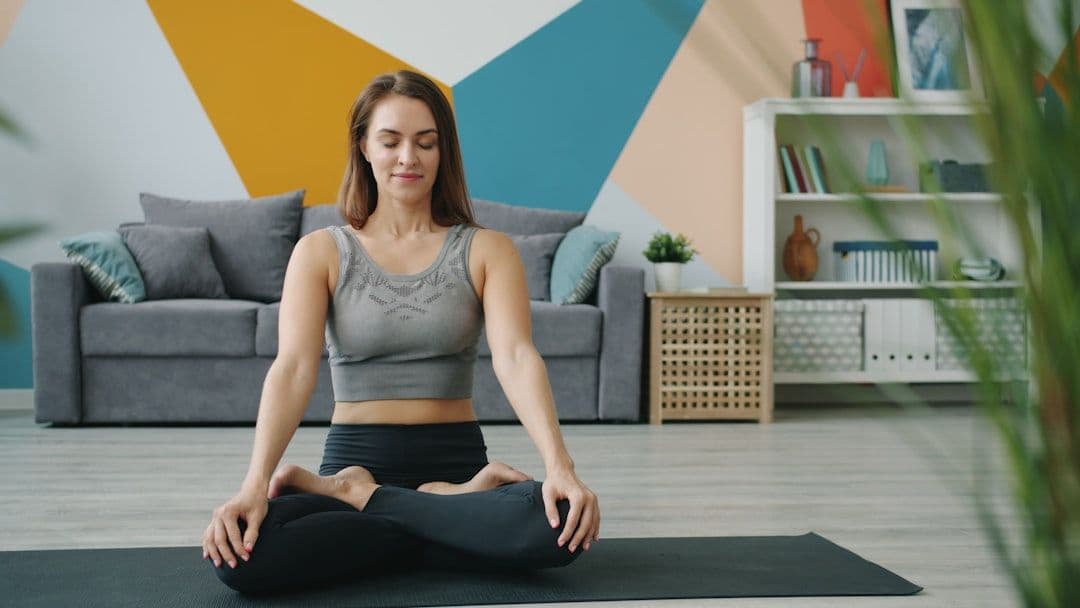
The practice appears deceptively simple: sit comfortably, close your eyes, and follow your chosen focus—breath, body sensations, a mantra, or simply the flow of awareness itself. Yet this basic shift in sensory input creates the foundation for virtually every major meditation tradition.
Ancient Roots, Modern Understanding
Eyes closed meditation spans millennia across Hindu, Buddhist, Taoist, and contemplative Christian traditions. Ancient yogic texts describe pratyahara—withdrawal of the senses—as a necessary step toward deeper concentration. Buddhist meditation manuals consistently instruct practitioners to close their eyes or lower their gaze to support internal focus.
The technique gained particular structure in India through vipassana and concentration practices, later travelling to Southeast Asia, Tibet, and eventually the West. Each tradition developed specific approaches: Zen emphasised just sitting with closed eyes, Tibetan Buddhism used visualisation practices requiring inner sight, whilst Hindu traditions often combined closed-eye meditation with breath control.
Western adoption accelerated in the 1960s and 1970s, initially through transcendental meditation programmes. The practice gained scientific legitimacy in the 1980s when researchers at Harvard and other universities began documenting measurable physiological changes in regular practitioners. Today, secular versions form the backbone of mindfulness-based stress reduction programmes used in hospitals and clinics throughout the UK.
How Closing Your Eyes Changes Your Brain
When you close your eyes during meditation, your brain shifts into different operating modes. The default mode network—regions active during mind-wandering and self-referential thinking—initially becomes more noticeable before gradually quieting with practice. Meanwhile, areas associated with interoception (internal body awareness) and executive attention become more active.
Research using fMRI scans shows that regular eyes closed meditation literally reshapes brain structure. The prefrontal cortex, responsible for emotional regulation and decision-making, becomes thicker. The amygdala, your brain's alarm system, becomes less reactive to stress. The insula, which processes internal sensations, develops greater sensitivity and integration.
From the practice's own framework, closing your eyes supports prajna (wisdom) by reducing sensory distraction and allowing subtler states of awareness to emerge. Practitioners often describe initial restlessness giving way to deeper calm, then to states where the sense of separate self begins to dissolve. These descriptions align remarkably well with neuroscientific findings about reduced default mode network activity and increased present-moment awareness.
What to Expect in Practice
Your first attempts at eyes closed meditation might surprise you. Many people expect immediate calm but instead encounter racing thoughts, physical restlessness, or even anxiety. This is normal—you're becoming aware of mental activity that was always present but previously overshadowed by visual stimulation.
A typical session begins with settling into your posture, closing your eyes, and choosing your anchor—usually the breath, body sensations, or a simple phrase. For the first few minutes, your mind will likely dart between sensations, memories, and plans. Rather than fighting this, you gently return attention to your chosen focus each time you notice it's wandered.
With consistent practice over weeks, most people notice changes: falling asleep becomes easier, stress reactions feel less overwhelming, and moments of genuine calm emerge during sessions. Some practitioners report profound experiences—deep peace, insight, or altered states of consciousness—though these aren't necessary for the practice to be beneficial.
Sessions typically last 10-45 minutes, with most beginners finding 15-20 minutes manageable. Morning practice often feels clearer due to lower mental chatter, though any consistent time works. The key is regularity rather than duration—daily 10-minute sessions typically produce better results than weekly hour-long attempts.
The Evidence Base
Research on eyes closed meditation has produced encouraging results across multiple domains. A 2014 systematic review examining 47 trials found moderate evidence for reduced anxiety, depression, and pain in practitioners compared to control groups. Neuroimaging studies consistently show structural brain changes after 8-week programmes, particularly in regions governing emotional regulation and attention.
Stress reduction appears most reliably supported by evidence. Multiple trials show decreased cortisol levels and improved immune function in regular practitioners. Sleep quality improvements are well-documented, with some studies showing benefits comparable to sleep medications but without side effects.
However, research limitations remain significant. Most studies examine secular programmes in clinical settings rather than traditional spiritual contexts. Individual responses vary enormously—some people show dramatic benefits whilst others experience minimal change despite consistent practice. The mechanisms underlying reported benefits remain partly unclear, though neuroplasticity offers promising explanations.
Moreover, traditional claims about spiritual development and consciousness expansion remain largely outside scientific investigation. These aspects may be valuable for practitioners but shouldn't be confused with clinically validated benefits.
Finding Instruction and Establishing Practice
Quality instruction significantly impacts success with eyes closed meditation. Self-guided apps like Headspace or Insight Timer offer convenient starting points (£5-15 monthly), but in-person or live online instruction typically produces better results. Look for teachers certified through recognised programmes: MBSR instructors trained at University of Massachusetts, MBCT teachers certified through Oxford Mindfulness Centre, or Buddhist teachers with authentic lineage connections.
Group classes cost £8-15 per session, whilst private instruction ranges £40-80 hourly. Many Buddhist centres offer donation-based sessions, making practice accessible regardless of budget. Eight-week structured programmes (£150-300) provide systematic skill development and peer support.
When evaluating teachers, prioritise those with substantial personal practice and recognised training over those making dramatic health claims. Good instructors emphasise gradual development rather than immediate transformation and can guide you through common difficulties like restlessness or emotional responses that sometimes emerge.
Consistency matters more than perfection. Start with 10 minutes daily rather than ambitious goals you're unlikely to maintain. Many practitioners find morning sessions work best before daily responsibilities accumulate. Most importantly, approach the practice with patience—meaningful changes typically emerge over months rather than days.