Before You Arrive
Wear comfortable, loose-fitting clothing that allows you to sit cross-legged or in a relaxed position for extended periods. Avoid anything restrictive around your waist or chest, as deeper breathing often occurs during sessions.
Eat lightly beforehand — a heavy meal can make you drowsy or uncomfortable when settling into the meditative aspects of the experience. Remove any jewellery that might create unwanted sounds when moving, particularly bangles or watches that could interfere with the instrument's pure tones.
Avoid caffeine for at least two hours before your session, as the goal is often deep relaxation rather than alertness. If you wear hearing aids, discuss with your practitioner whether to keep them in — some people prefer the natural acoustic experience whilst others need amplification to fully engage with the subtle harmonics.
The Session Unfolds
Most sessions begin with a brief conversation about your experience with music and what you hope to gain. Don't worry if you've never played an instrument — handpans are designed for intuitive interaction rather than technical proficiency.
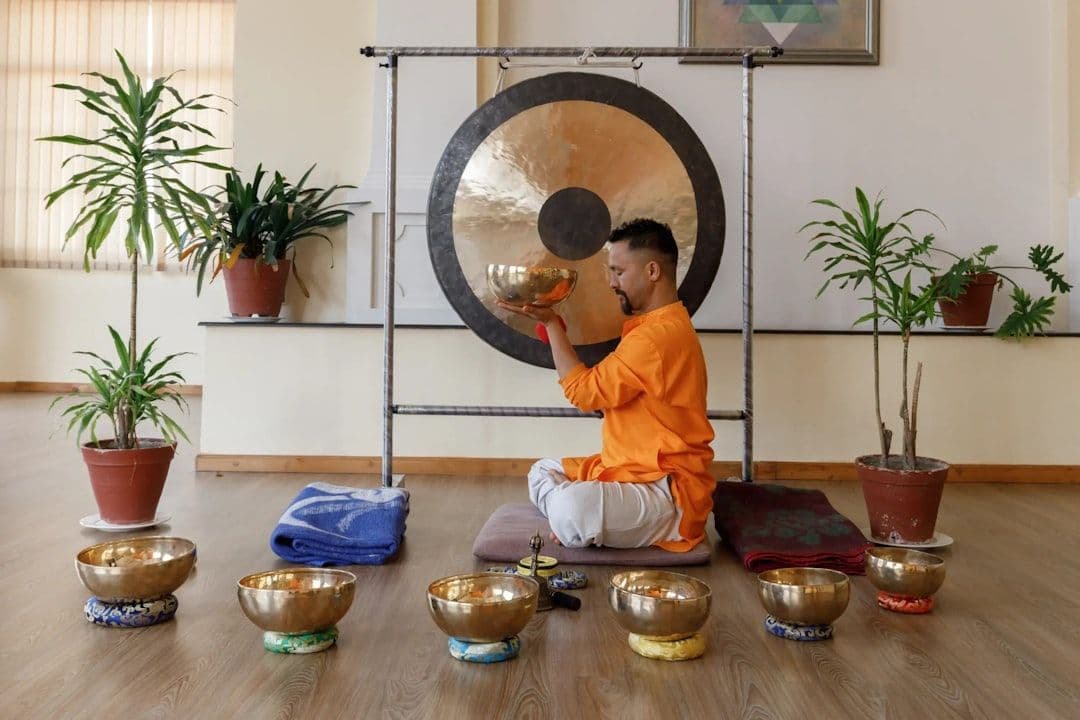
You'll typically sit opposite the practitioner with the handpan positioned between you, either on a stand or cushioned surface. The first 10-15 minutes usually involve listening as the practitioner demonstrates the instrument's range, starting with gentle strikes that produce sustained, bell-like tones. Each note creates visible vibrations across the steel surface.
The main portion involves guided playing, where you'll learn to strike different areas with your fingertips or soft mallets. The sound varies dramatically depending on where and how you touch the surface — the centre produces deep, grounding tones whilst the outer areas create higher, more crystalline notes. There's no wrong way to play, and the practitioner will encourage exploration rather than correct technique.
Sessions often conclude with a few minutes of stillness, allowing the final notes to fade completely before discussing your experience.
What You Might Experience
During the session, many people notice their breathing naturally deepening as the sustained tones encourage longer exhales. The harmonic vibrations can feel almost physical — some describe a gentle buzzing sensation in their chest or a sense that the sound waves are moving through their body.
Emotionally, responses vary considerably. Some feel immediately calm and centred, whilst others initially find the unfamiliar sounds slightly unsettling before settling into relaxation. It's common to lose track of time during active playing, as the repetitive, meditative nature of creating rhythms can induce a light trance-like state.
In the hours following a session, most people report feeling more grounded and less mentally scattered. Some experience improved sleep that night, whilst others feel more emotionally balanced for several days. However, not everyone has dramatic responses — for some, the benefit is simply an hour of focused, present-moment awareness.
Occasionally, people feel slightly emotional or unsettled after their first session, particularly if they're not accustomed to meditative practices. This typically resolves within a few hours.
After Your Session
Drink plenty of water in the hours following your session, as relaxation responses can sometimes lead to mild dehydration. Avoid immediately rushing into demanding activities — many people find they want to maintain the calm, contemplative mood for a while.
Plan some quiet time that evening if possible. Whilst you can resume normal activities immediately, the relaxation effects often deepen over the subsequent hours, and you may find yourself naturally wanting to move more slowly or reflectively.
Avoid alcohol for the remainder of the day, as it can interfere with the nervous system's natural rebalancing process that often continues after sound-based sessions. If you feel unusually emotional or introspective, this is normal — sound experiences can sometimes bring suppressed feelings to the surface.
Keep note of how you sleep that night and your energy levels the following day. Many people notice the effects most clearly 12-24 hours after their session rather than immediately afterwards.
Building a Practice
Most practitioners suggest starting with weekly sessions over four to six weeks to establish whether handpan work suits you. Unlike some therapies where benefits accumulate gradually, many people know after their first session whether the approach resonates with them.
For stress management, a monthly maintenance session often proves sufficient once you've learned basic techniques. Some people choose to purchase their own instrument for home practice — entry-level handpans start around £300, though quality instruments can cost significantly more.
Group sessions are increasingly popular and typically cost less than individual work. These create a layered sound experience as multiple instruments play simultaneously, though you'll have less personal guidance.
If you're interested in developing actual musical skills rather than purely therapeutic benefits, consider combining sound sessions with traditional music lessons. However, remember that handpans are designed for intuitive play — formal musical training isn't necessary to gain the relaxation benefits most people seek.