Before You Arrive
Come dressed comfortably in loose-fitting clothes that won't restrict movement during seated meditation or drawing activities. Many practitioners work on floor cushions, so avoid tight skirts or restrictive clothing. Bring a notebook if you wish to record insights, though your practitioner will likely provide materials for any drawing work.
Eat lightly beforehand - a heavy meal can make extended sitting uncomfortable, but don't arrive hungry as this may distract from contemplative work. Avoid alcohol for 24 hours prior, and limit caffeine on the day itself, as some people find stimulants interfere with the meditative aspects of the practice.
Switch your phone to silent mode before entering. Sacred geometry work often involves sustained visual focus and quiet reflection, making interruptions particularly jarring. If you wear glasses, bring them - much of the session involves observing intricate patterns and mathematical relationships.
The Session Unfolds
Your practitioner will begin with a brief conversation about your interests and any previous experience with meditation or geometric concepts. This initial chat typically lasts 10-15 minutes and helps them tailor the session to your background and intentions.
The main portion usually starts with basic pattern observation. You might study images of natural forms - spiral shells, flower petals arranged in Fibonacci sequences, or crystalline structures. Your practitioner will guide your attention to specific mathematical relationships, explaining concepts like the golden ratio or how pentagonal symmetry appears throughout nature.
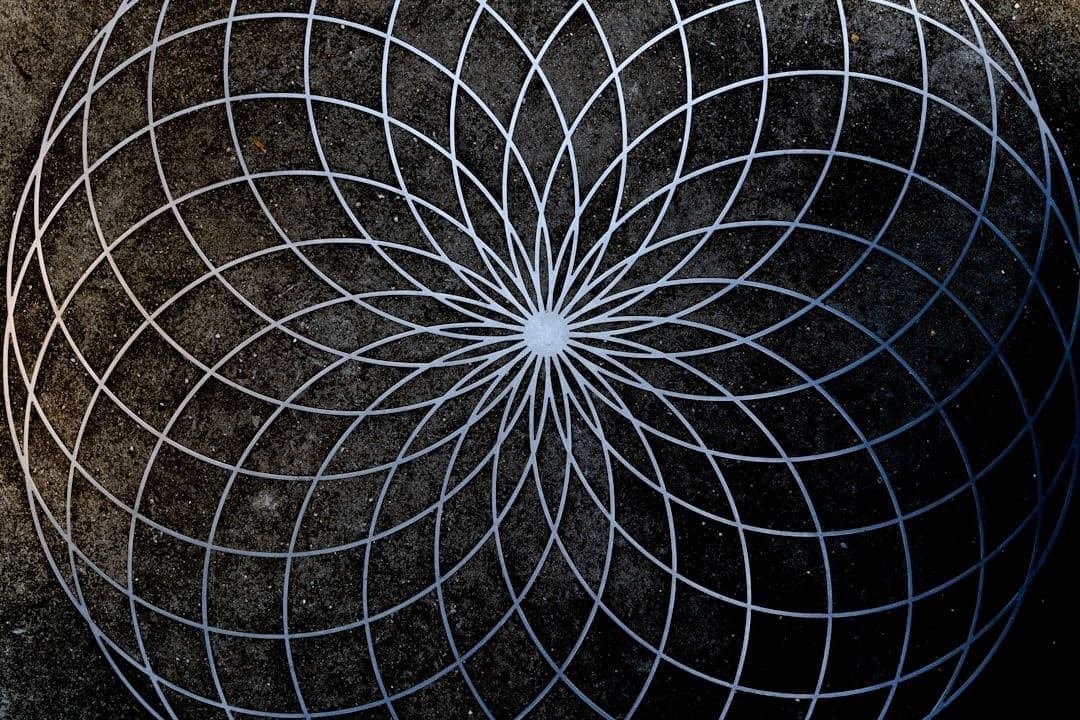
Most sessions include a meditative component where you focus on a particular geometric form. This might involve gazing at a mandala, tracing patterns with your finger, or visualising geometric shapes during guided meditation. These focused practices typically last 15-20 minutes, though time can feel quite different when you're absorbed in pattern work.
Many practitioners incorporate hands-on creation - you might draw sacred geometric patterns, work with compass and straightedge tools, or arrange physical objects according to geometric principles. This active engagement helps embody the mathematical concepts rather than simply observing them.
What You Might Experience
Experiences during sacred geometry work vary enormously between individuals and even between sessions. Some people report a profound sense of connection or recognition when observing certain patterns - as if they're seeing fundamental truths about reality's structure. Others experience a quieting of mental chatter, similar to other forms of meditation.
Physically, you might notice shifts in breathing or a sense of time distortion during pattern focus. Some describe a feeling of expansion or altered spatial awareness when working with three-dimensional geometric visualisations. Don't be concerned if you feel nothing dramatic - many people find the benefits emerge gradually through regular practice.
Emotionally, sacred geometry can evoke anything from wonder and peace to frustration with complex mathematical concepts. Some practitioners report insights about personal patterns or life situations emerging through the geometric work. These connections often feel meaningful to the individual, though they may seem abstract to others.
After sessions, many people notice heightened awareness of patterns in their daily environment - the spiral arrangement of leaves, architectural proportions, or natural symmetries they previously overlooked.
Aftercare and Integration
Spend some quiet time after your session rather than rushing into demanding activities. Many practitioners suggest a brief walk outdoors to ground yourself and observe natural patterns with your newly focused awareness.
Stay well-hydrated and eat nourishing food, particularly if you found the session emotionally intense. Some people experience vivid dreams following sacred geometry work, which practitioners often interpret as continued processing of the patterns and concepts explored.
Avoid making major decisions for 24 hours if you feel particularly affected by the session. While sacred geometry is generally gentle, any practice that shifts consciousness can temporarily alter your usual thinking patterns.
Keep that notebook handy over the following days - insights or pattern recognitions often emerge gradually rather than during the session itself. Notice what geometric forms or natural patterns draw your attention in daily life.
Building a Practice
Most practitioners recommend beginning with 3-4 sessions spaced weekly to establish familiarity with basic concepts and meditation techniques. This allows time to integrate insights between sessions whilst maintaining continuity of learning.
After this foundation, sessions might become fortnightly or monthly, depending on your interest level and how you respond to the work. Some people develop a personal sacred geometry practice between sessions, spending time with pattern books or geometric meditation.
Longer-term engagement might involve seasonal sessions that align geometric principles with natural cycles, or focused exploration of specific traditions - Islamic geometric art, Celtic knotwork, or Platonic solid meditation. Your practitioner will help design an approach that matches your interests and spiritual inclinations.
Remember that sacred geometry exists within wisdom traditions rather than medical frameworks. Approach it as personal exploration and spiritual inquiry, allowing the patterns and mathematical relationships to speak to you in whatever way feels authentic.