Before the Session: What to Expect
In the days before a shamanic healing session, you might notice yourself feeling both anticipation and a subtle nervousness. There is something about stepping into the unknown that the body registers, even if the conscious mind is curious rather than afraid. It helps to arrive with realistic expectations: shamanic healing is not magic, and it is not medical diagnosis or treatment. Instead, it is a ritualized space designed to help you access your own inner resources for healing and insight.
Before you arrive, a good practitioner will ask you some questions: What brings you here? Are you processing grief, anxiety, ancestral patterns, or burnout? Do you have a history of trauma or dissociation? This is not idle conversation—it helps the practitioner understand your context and tailor the work to keep you safe and resourced. Be honest. If you have serious mental health concerns, mention them. This is not a reason to exclude you, but it may shape how the practitioner approaches the session.
Wear comfortable clothing. There is often no talking during the core work, so remove distractions: phones on silent, jewelry that jingles. Some people find it helpful to set an intention beforehand—not a demand, but a gentle anchor. What would healing look like for you right now? What do you hope to feel differently? Hold this lightly.
Arriving and Setting the Scene
As you step into the shamanic healing space, your senses register a shift. The room is often dimly lit, perhaps with candles or soft light that makes the everyday world feel a little more distant. You might smell incense, herbs, or essential oils—scents chosen to settle the nervous system. There may be objects on an altar: stones, feathers, photographs, flowers. These are not props for performance; they are focal points that ground the work in intention and care.
The practitioner greets you with presence. There is no rushing. You sit together briefly, and they may ask a few clarifying questions or invite you to share what is on your heart. Some practitioners work in silence; others might offer a brief explanation of what will unfold. You lie down on a comfortable surface—a massage table, a blanket on the floor—and the practitioner might cover you with a blanket to help your body feel held. This matters more than it sounds. Being covered, in dim light, with another person present and attentive, signals to your nervous system that you can rest.
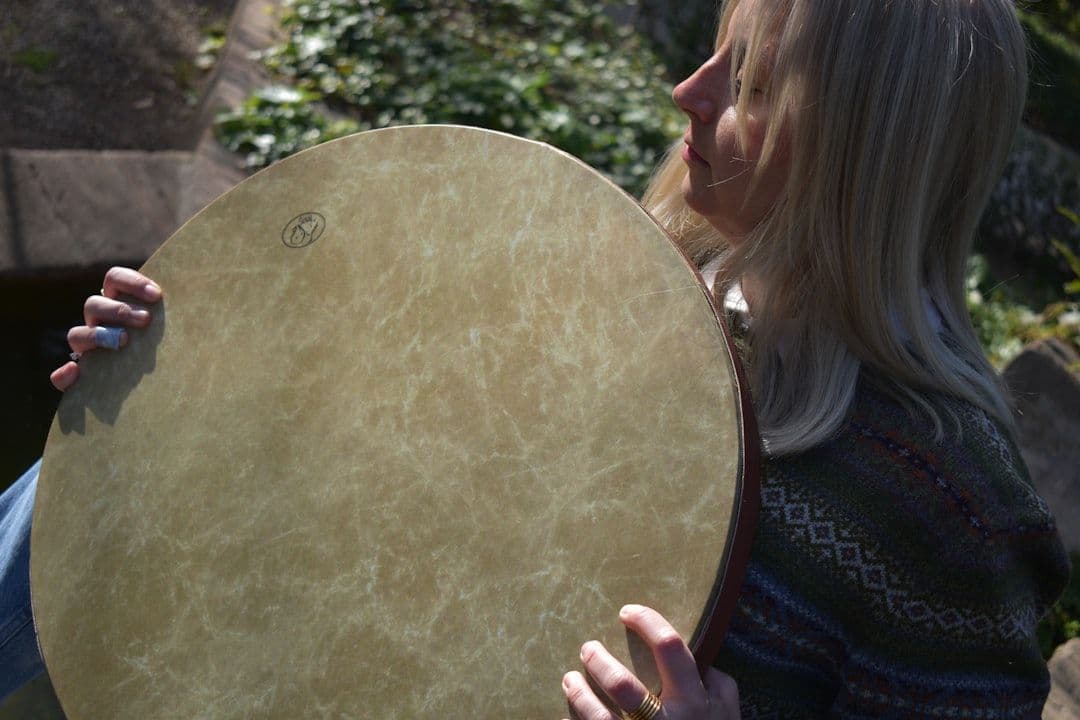
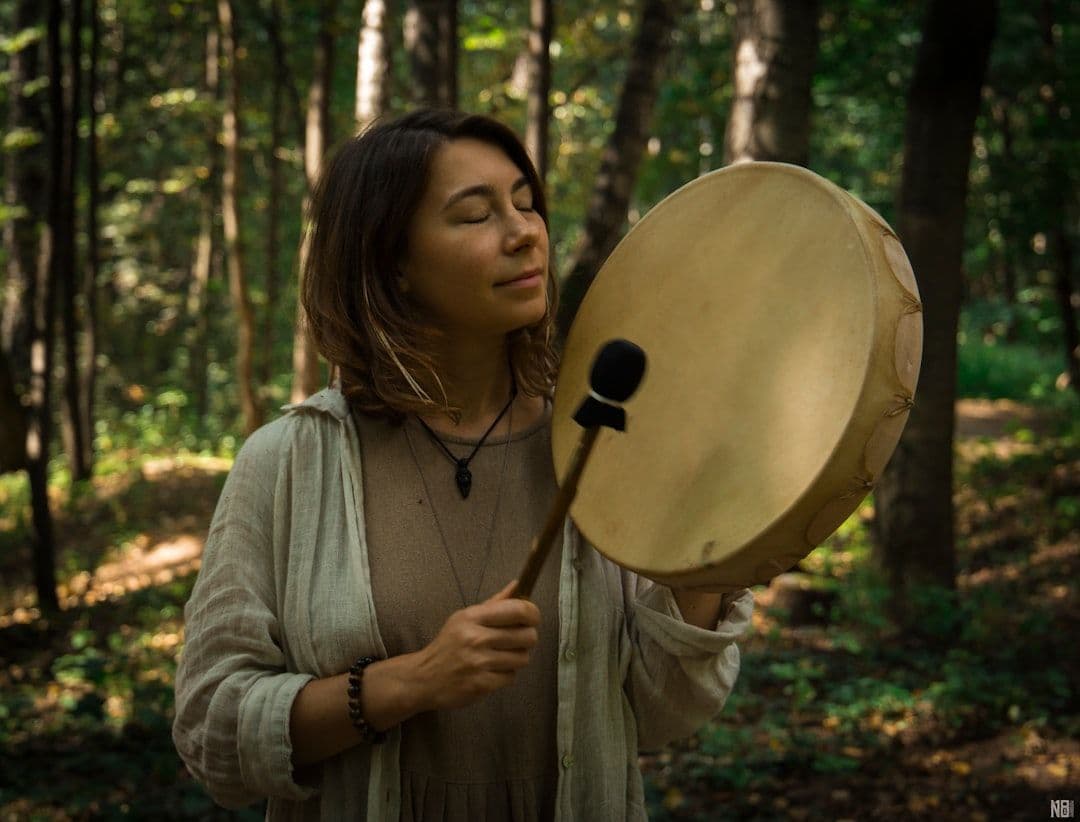
The practitioner explains they will use drumming, rattling, or other rhythmic sounds to guide a journey. You are invited to close your eyes and follow the rhythm, allowing images, sensations, or feelings to arise without judgment. There is nothing to achieve. If you fall asleep, that is okay. If you see nothing but darkness, that is okay too. This is your inner landscape, and whatever comes is valid.
During the Session
The drumming begins, often at a steady, measured pace—around 4 to 4.5 beats per second, a rhythm that researchers have noted may synchronize with brainwave patterns associated with relaxation and expanded awareness. As the sound enters your body, something shifts. The everyday mind, with its lists and worries, begins to quiet. Your awareness turns inward.
You might find yourself in a landscape: a forest, a mountain, a river, a garden. The images may be vivid or gentle, realistic or dreamlike. Or you might not see images at all—instead, you feel sensations, emotions, a sense of presence. Some practitioners describe this as meeting your power animal, your guides, or your ancestors. The language varies by tradition, but the experience is often one of being met by something larger than yourself, something that feels resourceful and benevolent.
A common element of shamanic healing is the retrieval of what practitioners call soul parts—pieces of yourself that may have been fragmented or scattered by trauma, grief, or prolonged stress. In the shamanic framework, this is understood as a loss of presence, wholeness, or vital energy. The practitioner, through guided journey or direct intervention, may work to restore these parts, to bring them back into your awareness and your body. This is not literal; it is symbolic and experiential. Yet for many people, the feeling of coming back together, of integration, is profoundly real.
Throughout the session, your body may release tension. You might feel warmth, tingling, or waves of emotion. Some people cry; others feel lighter, as if something heavy is being lifted. Some experience vivid colors or a sense of profound peace. The practitioner may use rattles, hands-on work, or sound to support the process. The rhythm of the drumming continues, a constant anchor, until gradually the pace slows and you are gently called back to your ordinary awareness.
How You May Feel Afterwards
As you return to the room, the first thing you notice is your breath. Your body feels heavy, relaxed, sometimes almost as if you are waking from deep sleep. There is often a few moments of integration time—you may lie quietly, eyes closed, letting the experience settle. The practitioner might offer you water or give you time to simply be present with what just happened.
When you are ready, you might talk about your experience. What did you see or feel? Was there an image, a color, a sense of presence? The practitioner may offer reflection or insight, but the interpretation is ultimately yours. If you retrieved a power animal or met a guide, the practitioner might explain how to work with that relationship going forward. Some people leave with clear, actionable shifts in perspective; others feel something has shifted at a level beyond words.
In the hours and days after, many people report changes: deeper sleep, a reduction in anxious thoughts, a sense of calm or clarity, emotional softness, or renewed energy. Some describe feeling more present, less numb, or more connected to purpose. Others report a shift in how they hold grief—still present, but less isolating. Not everyone experiences dramatic change, and that too is valid. Shamanic healing works at the level of consciousness and the body's felt sense of safety; sometimes the benefits are subtle.
It is common to feel some emotional processing in the days afterward. Grief may surface, or old memories. This is not a sign that something went wrong; it is often part of integration. Having a mental health support person or trusted friend to talk to can be helpful. Some practitioners recommend journaling, rest, or gentle movement. Be gentle with yourself. Your system is metabolizing something.
Is It Right for You?
Shamanic healing may resonate with you if you are drawn to symbolic, narrative, and ritual approaches to wellbeing; if you have cultural or spiritual roots in indigenous or traditional healing frameworks; if you are processing grief, ancestral patterns, or a sense of disconnection; or if you are seeking to complement conventional care with something that addresses the spiritual dimensions of your experience.
It may not be the right fit—at least not at this time—if you are in acute crisis, experiencing active psychosis or severe dissociation, or if you have strong resistance to spiritual or symbolic language. It is also not a replacement for psychiatric or psychological care in serious mental health conditions.
The most important question is not whether shamanic healing is objectively real or scientifically proven, but whether it is meaningful and safe for you. Does the idea of guided journey and ritual feel inviting or coercive? Does the practitioner inspire trust? Are they transparent about what shamanic healing is and is not? Do they ask about your mental health history and take it seriously? Do they refrain from making medical claims?
If you decide to explore shamanic healing, do so with openness and discernment. Seek practitioners with clear training, ethical frameworks, and professional credentials where available. Tell your healthcare provider what you are doing. Trust your body's responses and your own sense of what feels safe. And remember: healing is not linear, and your experience is valid, whether it unfolds dramatically or gently, quickly or over time.