Before You Arrive
Wear comfortable, loose-fitting clothes that won't restrict movement — think yoga attire rather than jeans. You'll be lying on the floor for portions of the session, so layers you can easily adjust are helpful.
Eat lightly beforehand. A heavy meal can make the floor exercises uncomfortable, whilst an empty stomach might leave you feeling lightheaded during tremoring. A small snack an hour or two before works well.
Avoid alcohol for 24 hours prior, as it can interfere with your nervous system's natural responses. If you're taking medications that affect your nervous system, mention this to your provider. Some people find it helpful to arrive a few minutes early to settle in and ask any last-minute questions.
The Seven Exercises
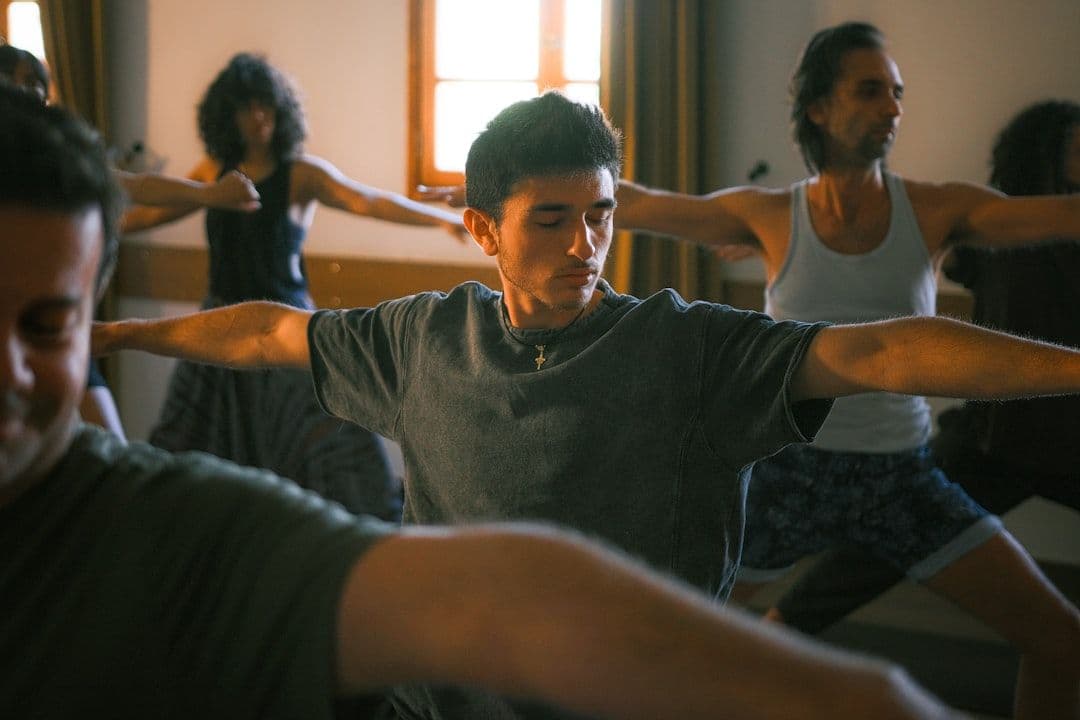
Your session begins with the provider explaining TRE's purpose and demonstrating the seven exercises. Each exercise targets the psoas and other deep flexor muscles, progressively fatiguing them to encourage tremoring.
The sequence starts standing — gentle stress positioning, marching on the spot, and toe touches to begin engaging your psoas. You'll then move to the floor for exercises that systematically tire your hip flexors and adductors. The final positions involve lying on your back with knees bent, gradually widening your stance until your legs begin to shake.
Each exercise lasts 1-3 minutes, building fatigue without strain. Your provider will guide the pace, watching for signs that your muscles are sufficiently tired. The entire exercise sequence typically takes 15-30 minutes, depending on how quickly your body responds.
You maintain control throughout. If an exercise feels too intense, you can ease off or skip it entirely. The goal is gentle fatigue, not exhaustion.
When the Tremoring Begins
As your legs begin to shake, you'll transition to the recovery position — lying on your back with knees bent and feet flat. This is when most people experience neurogenic tremoring, though it can start during the exercises themselves.
The tremors typically begin in your legs — small vibrations that may feel similar to shivering when cold. They can spread through your pelvis, torso, and occasionally your arms and shoulders. Some people experience gentle undulations, others more pronounced shaking. Both are normal.
During tremoring, you remain conscious and aware. Many people describe feeling curious about the sensations, sometimes surprised by their body's automatic responses. You can slow or stop the tremors at any time by pressing your feet firmly into the floor or bringing your knees together.
This phase usually lasts 10-15 minutes in a first session. Your provider will suggest stopping before you feel tired, as longer isn't necessarily better. The tremoring typically subsides naturally, leaving most people feeling relaxed and sometimes slightly spacey.
Physical and Emotional Responses
During tremoring, you might notice warmth spreading through your body, deeper breathing, or a sense of release in tight areas. Some people feel energy moving through them, others describe it as tension simply melting away.
Emotional responses vary widely. Many people feel calm or peaceful. Others might experience brief waves of emotion — sadness, joy, or relief — without necessarily understanding why. These responses are considered normal releases as your nervous system discharges stored tension.
After tremoring stops, most people feel pleasantly relaxed, though some initially feel unsettled or emotionally tender. A few people feel energised rather than relaxed. These varied responses reflect your nervous system's individual patterns and are equally valid.
In the hours following, you might notice improved sleep, reduced muscle tension, or emotional clarity. Some people feel more grounded, others temporarily more sensitive. Effects often continue developing for 24-48 hours.
Immediate Aftercare
Rest for 10-15 minutes after tremoring before getting up. Drink water slowly and avoid rushing back into activity. Many people benefit from gentle movement — a short walk or light stretching — rather than immediately sitting still.
For the remainder of the day, listen to your body's needs. Some people want to be quiet and introspective, others feel like socialising. Avoid intense physical exercise or stressful activities for a few hours if possible.
Sleep can be deeper than usual, and dreams occasionally more vivid. This is your nervous system continuing to integrate the session. If you feel emotionally unsettled, gentle self-care activities — warm baths, journaling, or time in nature — often help.
Contact your provider if you experience persistent discomfort or concerning emotional responses, though significant adverse effects are uncommon when TRE is introduced gradually.
Building Your Practice
Most people need 6-12 sessions to learn TRE confidently and understand their body's responses. Initial sessions are typically spaced 1-2 weeks apart, allowing time to integrate each experience.
After learning the technique, many people practice independently at home, using TRE as needed for stress management. Some continue occasional check-ins with a provider, whilst others develop a regular self-practice routine.
The frequency that works varies enormously. Some people benefit from weekly sessions during stressful periods, others use TRE monthly for maintenance. Your body will typically signal when it needs a session — through increased tension, stress symptoms, or simply feeling drawn to practice.
TRE's value lies in becoming a tool you can use independently. Unlike many therapeutic modalities, the goal is developing self-sufficiency rather than ongoing dependence on sessions.