Before the Session
At your first appointment, the practitioner will take a detailed history — asking about what has brought you to biofeedback, relevant health conditions, current symptoms, and any previous experience with stress management or therapy. They will explain the specific type of biofeedback they use, what the equipment measures, and what you will be aiming to learn.
Wear comfortable clothing. Avoid caffeine for a few hours beforehand if possible, as it can affect HRV and skin conductance readings. Arrive a few minutes early to settle.
Sensor Attachment
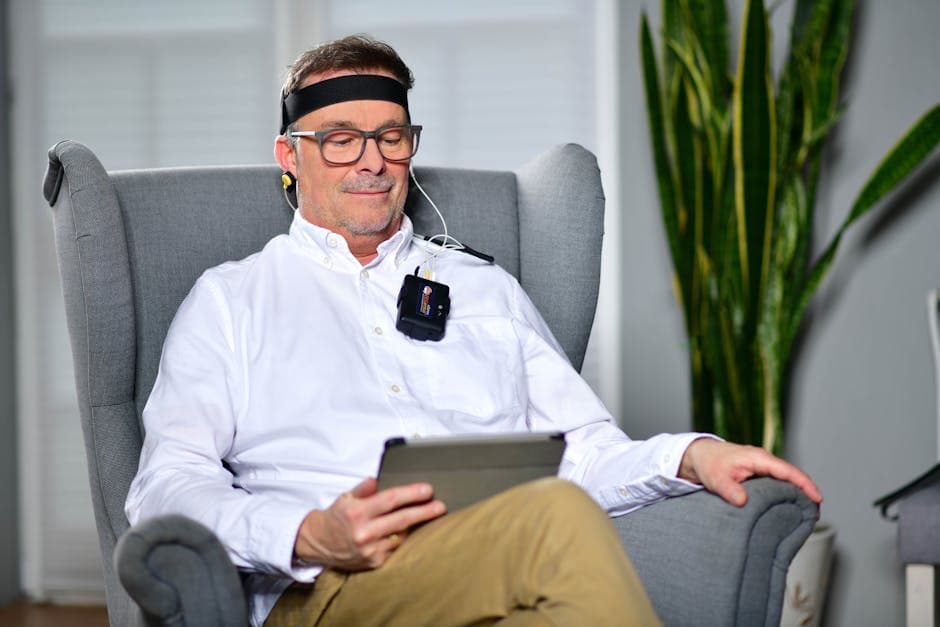
The practitioner will attach small surface sensors to your body. For HRV biofeedback, this is usually a fingertip pulse oximeter, an ear clip, or a chest strap. For EMG biofeedback targeting muscle tension, small adhesive electrodes are placed on the relevant muscle groups (often the trapezius, forearms, or forehead). For skin conductance, sensors go on the fingertips. None of this involves needles or any penetration of the skin.
The Biofeedback Training
Once sensors are attached, your physiological data is displayed on a screen — often as a graph, a moving line, or an interactive visual display. You and the practitioner can see your readings in real time. The practitioner will guide you through techniques designed to influence what you see: for HRV biofeedback, this typically involves breathing at a specific rate (often around six breaths per minute); for EMG, it involves progressive relaxation of the targeted muscles.
Over the course of the session, you will see your numbers shift as you apply different techniques. Many people find this immediate feedback loop surprisingly motivating — it makes the invisible physiology of stress and relaxation visible and actionable.
Learning Transferable Skills
The goal of biofeedback is not to require a screen and sensors forever. Over multiple sessions, the techniques you practise become internalised — you develop a felt sense of what physiological regulation feels like, which you can apply anywhere. Most practitioners will provide or recommend a home device (such as a portable HRV monitor) and suggest brief daily practice between sessions.
After the Session
Most people feel calm and alert after a biofeedback session. The practitioner will typically debrief with you — discussing what you noticed, which techniques seemed to produce the strongest effects, and what to practise before the next appointment. Progress is usually tracked across sessions, and you will be able to see improvement in your baseline metrics over time.