The Research Landscape
Druidic healing exists in a research category all its own. Unlike many complementary practices that have attracted clinical investigation, these ancient Celtic traditions operate within knowledge systems that predate and exist independently of modern scientific methodology.
No clinical trials, systematic reviews, or controlled studies have examined Druidic healing as a complete practice. This absence reflects not a research gap requiring filling, but rather the nature of the practice itself. Within the Druidic framework, healing wisdom emerges from centuries of plant observation, seasonal attunement, and spiritual understanding passed through oral tradition.
The closest research parallels exist in ethnobotanical studies of Celtic plant use and investigations of specific herbs traditionally employed in these practices. However, such studies examine isolated components rather than the integrated approach that defines authentic Druidic work.
Evidence for Component Practices
While holistic Druidic healing lacks direct research, some of its constituent elements have attracted scientific attention. Traditional Celtic herbs like meadowsweet contain salicylates similar to those in aspirin, and modern research has confirmed anti-inflammatory properties in several plants historically used by Celtic healers.
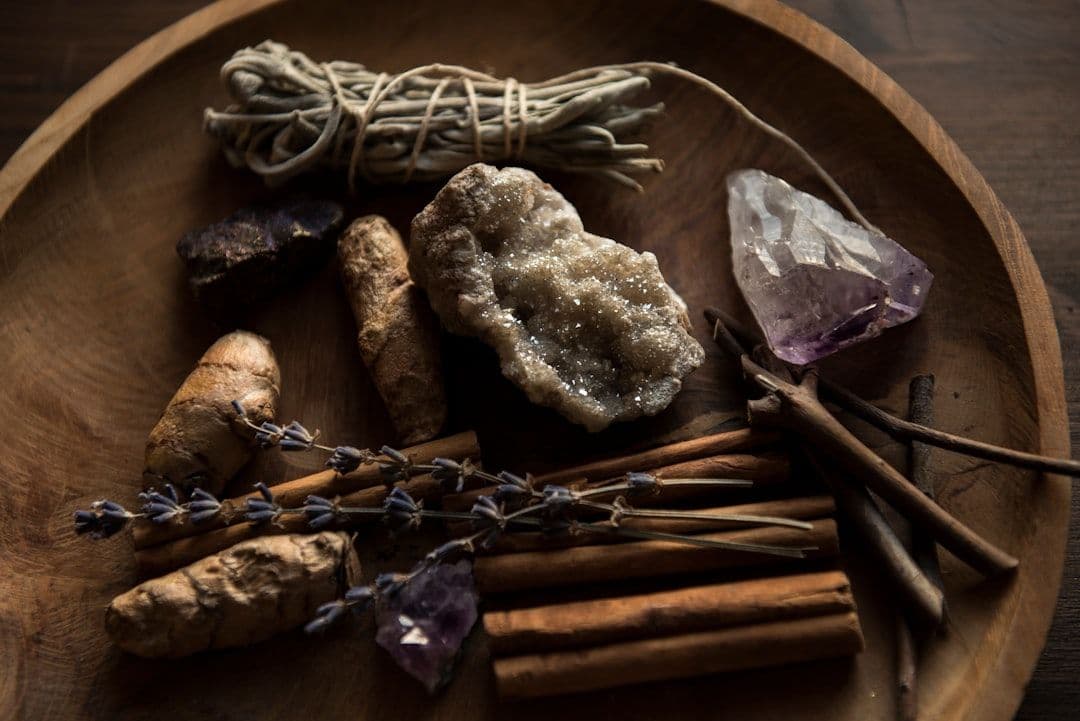
Oak bark, central to many Druidic preparations, contains tannins with astringent properties that research suggests may support wound healing. Hawthorn, another traditional Celtic remedy, has moderate evidence for cardiovascular support, though studies have examined standardised extracts rather than traditional preparations.
Nature-based practices more broadly — forest bathing, seasonal ritual, earth connection — have emerging research support for stress reduction and psychological well-being. However, these studies examine secular applications rather than the spiritual framework within which Druidic practitioners understand such activities.
Understanding Traditional Knowledge
Druidic healing operates from fundamentally different premises than evidence-based medicine. Within this tradition, plant knowledge emerges through direct relationship and energetic understanding rather than isolated compound analysis. Practitioners speak of working with plant spirits, seasonal energies, and landscape consciousness.
This doesn't make the practice less valuable — it makes it differently valuable. Celtic healing wisdom encompasses sophisticated understanding of plant properties, human constitution, and natural cycles developed over millennia. Contemporary Druidic healers blend this ancestral knowledge with modern safety awareness, creating practices that honour tradition whilst acknowledging current understanding.
The tradition's emphasis on individual constitutional assessment, seasonal timing, and holistic preparation methods reflects a complex understanding of healing that doesn't translate easily into randomised controlled trial methodology.
Limitations and Cultural Considerations
Attempting to evaluate Druidic healing through conventional research frameworks risks missing its essential nature. The practice's integration of herbalism, ritual, seasonal awareness, and spiritual relationship creates a whole that transcends its measurable parts.
Practical limitations also exist. Historical Druidic knowledge was deliberately kept oral, creating gaps in our understanding of authentic practices. Modern practitioners often reconstruct approaches based on archaeological evidence, historical accounts, and Celtic cultural continuity rather than unbroken lineage transmission.
Safety considerations centre primarily on herbal preparations. Some traditional Celtic plants require expert knowledge for safe use, and others may interact with modern medications. Contemporary practitioners typically combine traditional plant wisdom with current phytotherapy understanding.
Future Directions
Rather than seeking to validate Druidic healing through clinical research, future understanding might emerge through anthropological study, ethnobotanical investigation, and phenomenological research into practitioner and participant experiences.
More valuable questions might explore how traditional Celtic healing wisdom can inform modern approaches to plant medicine, seasonal living, and nature-based healing. Research into the psychological and social benefits of traditional cultural practices could illuminate aspects of Druidic work without reducing it to measurable outcomes.
For those drawn to this path, the invitation lies not in awaiting scientific validation but in exploring the practice within its own cultural and spiritual context, understanding that some forms of knowledge operate beyond the reach of randomised trials.