Following Voices in the Dark
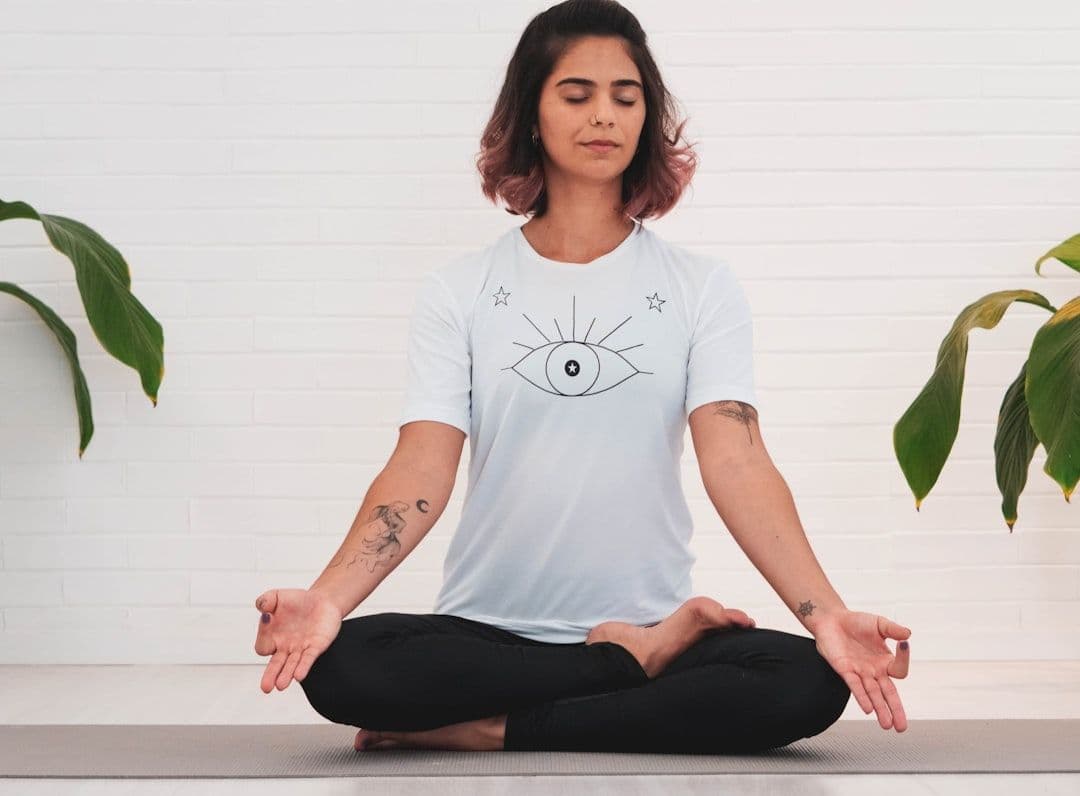
Picture yourself settled into stillness, eyelids gently closed, as a calm voice begins to paint landscapes with words. "Notice your breath moving in... and out. Now imagine yourself walking along a forest path..." This is eyes closed guided meditation — a practice where you surrender visual awareness to follow verbal instructions deeper into inner experience.
Unlike silent meditation where you navigate consciousness alone, guided practice provides a roadmap. The instructor's voice becomes your anchor, offering breathing cues, visualisation prompts, or body awareness exercises whilst your closed eyes eliminate the outside world's visual chatter. This combination creates what many practitioners describe as a cocoon of focused attention.
The practice requires nothing more than comfortable positioning and willingness to follow guidance. Yet this simplicity belies its sophistication — by removing sight, your other senses sharpen, and attention naturally turns inward where the real work begins.
From Ancient Roots to Modern Applications
Guided meditation practices trace back thousands of years across Buddhist, Hindu, and yogic traditions, where teachers would verbally lead students through contemplative exercises. Tibetan Buddhist "analytical meditation" involves following detailed verbal instructions through philosophical concepts, whilst yoga nidra guides practitioners through systematic body awareness.
The contemporary format emerged in the 1970s when Western teachers began adapting Eastern techniques for secular contexts. Jon Kabat-Zinn's mindfulness-based stress reduction programmes incorporated guided body scans, whilst psychologists developed guided imagery for therapeutic applications.
Today's practice bridges ancient wisdom with modern accessibility. Apps, online platforms, and audio recordings have democratised access, allowing people to experience guided meditation without seeking formal teachers. This evolution has maintained the core principle — voice as guide, eyes closed to enhance receptivity — whilst adapting delivery methods for contemporary lifestyles.
How Darkness and Voice Shape Consciousness
Closing your eyes triggers immediate neurological changes. Visual processing consumes roughly 30% of the brain's energy, so eliminating visual input redirects attention to internal sensations, thoughts, and emotions. This sensory deprivation naturally enhances introspective awareness.
The guide's voice serves multiple functions. It provides structure, preventing the mind from spiralling into rumination or anxiety. Verbal cues direct attention systematically — to breath, body sensations, or visualised imagery — creating what neuroscientists call "focused attention meditation." This differs from open monitoring practices where you observe whatever arises.
Research suggests guided formats may be particularly effective for beginners because external instruction compensates for underdeveloped internal awareness. Brain imaging studies show that guided meditation activates the prefrontal cortex (associated with attention regulation) whilst reducing activity in the default mode network (linked to self-referential thinking and worry).
The combination of reduced visual stimulation and structured verbal guidance creates optimal conditions for what practitioners call "letting go" — a state where conscious control softens and deeper awareness emerges.
Who Finds Their Way in Guided Darkness
People with overactive minds often discover that guided practice provides the structure they need. If you've tried silent meditation only to find your thoughts racing, verbal guidance can serve as a gentle tether, repeatedly drawing attention back to the present moment without harsh self-correction.
Those experiencing sleep difficulties frequently benefit from guided sleep meditations. The practice trains your nervous system to shift from activation to rest, with many finding that regular evening sessions improve sleep quality over time.
Anxiety sufferers often appreciate guided formats because the instructor's presence — even through audio — provides reassurance during uncomfortable moments. Rather than feeling alone with difficult emotions, you have a calm voice walking you through the experience.
Trauma survivors should approach cautiously, as guided imagery can sometimes trigger difficult memories. However, when practised with trauma-informed instructors, it can become a powerful tool for developing present-moment awareness and emotional regulation.
Inside a Guided Journey
Sessions typically begin with settling instructions — finding comfortable positioning, perhaps adjusting lighting or temperature. The guide's voice emerges clearly, often starting with breath awareness to establish focus.
Content varies enormously. Body scan meditations systematically guide attention through physical sensations from toes to head. Visualisation practices might lead you through peaceful landscapes, whilst loving-kindness meditations direct specific phrases toward yourself and others.
Duration ranges from brief 5-minute practices for busy schedules to extended 45-minute sessions for deeper exploration. Many practitioners find 15-20 minutes optimal for regular practice — long enough to settle deeply, short enough to maintain consistency.
The guide's tone matters enormously. Effective instructors speak slowly, allowing space between instructions. Their voice quality can make or break the experience — too dramatic becomes distracting, too monotone induces boredom rather than relaxation.
What Research Reveals
Multiple systematic reviews demonstrate guided meditation's effectiveness for anxiety reduction, with effect sizes comparable to other established interventions. A 2018 meta-analysis found significant improvements in anxiety symptoms across 93 studies, though most examined general mindfulness practices rather than specifically guided formats.
Sleep research shows promising results. Studies of guided sleep meditations report reduced time to fall asleep and improved sleep quality scores. However, many studies suffer from small sample sizes and lack long-term follow-up data.
Neuroscience research reveals measurable brain changes after guided meditation practice. Regular practitioners show increased grey matter density in areas associated with attention and emotional regulation. Yet most studies examine experienced meditators, making it difficult to separate guided practice effects from meditation in general.
The evidence base continues expanding, though robust trials comparing guided versus unguided formats remain limited. What's clear is that guided meditation produces measurable benefits for stress, anxiety, and sleep — outcomes that matter regardless of the specific mechanism.
Finding Your Guide
Live instruction costs vary significantly across the UK. Group classes typically range from £8-20 per session, with monthly memberships at £40-80 offering better value. Private sessions cost £40-100 per hour, though most people benefit from group formats initially.
App subscriptions provide affordable access at £5-15 monthly, featuring extensive libraries of guided content. Popular platforms include Insight Timer, Headspace, and Calm, each offering different teaching styles and session lengths.
When choosing instructors, look for meditation teacher training credentials. In the UK, the Centre for Mindfulness and Compassion, Mindfulness in Schools Project, and Bangor University offer respected certification programmes. Teachers should complete at least 200 hours of training plus maintain personal practice.
Avoid practitioners making grandiose claims about healing specific conditions. Quality instructors acknowledge meditation's limitations whilst highlighting its genuine benefits for stress, attention, and emotional balance. They should screen for mental health concerns and know when to recommend professional therapy instead.