Before You Arrive
Wear loose, comfortable clothing — think yoga wear or cotton tracksuit bottoms and a soft t-shirt. Unlike Western massage, you'll remain fully clothed throughout the session. Avoid tight jeans or restrictive garments that limit movement.
Eat lightly beforehand. A heavy meal can make the abdominal work uncomfortable, whilst an empty stomach might leave you feeling dizzy during position changes. A light snack 1-2 hours before works well.
Arrive 10 minutes early for your initial consultation. Your practitioner will ask about your health history, current concerns, and any areas of particular tension. This isn't just politeness — traditional Japanese massage theory considers your overall constitution and energy patterns, not just the sore spots.
The Session Unfolds
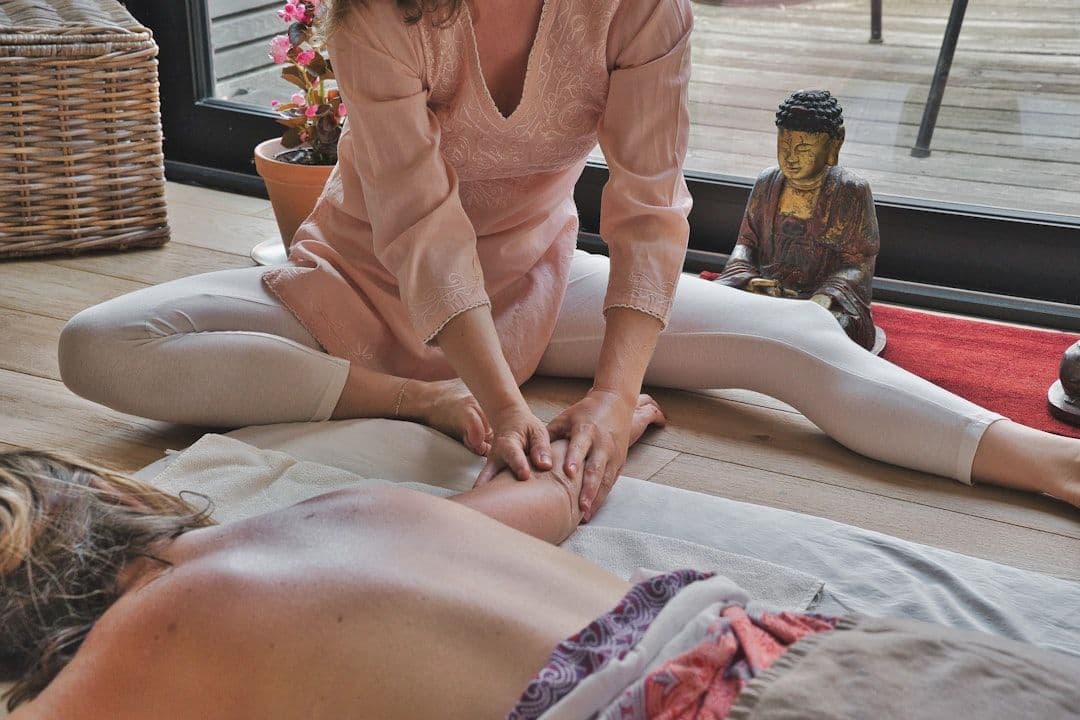
Most sessions begin on a firm mat on the floor rather than a massage table. Your practitioner will guide you to lie on your back initially, perhaps placing a bolster under your knees for comfort. The room is typically warm and quiet, with soft lighting.
The work starts gently. Your practitioner might begin with broad, rhythmic movements across your torso and limbs — not yet the precise pressure work you might expect. This initial phase, lasting 10-15 minutes, helps them assess your body's response and begin to influence your nervous system towards relaxation.
Pressure work comes next. Using thumbs, palms, and sometimes elbows, your practitioner applies sustained pressure to specific points along traditional meridian pathways. Unlike the gliding strokes of Swedish massage, this involves holding steady pressure for several seconds at each point. You'll feel a deep, sometimes intense sensation — not sharp pain, but a meaningful pressure that might make you breathe more deeply.
Stretching and mobilisation weave through the session. Your practitioner might gently rock your limbs, perform passive stretches, or guide you through simple movements. These aren't dramatic manipulations — more like encouraging your body to move in ways it's forgotten how to move freely.
What You Might Experience
Sensations vary dramatically between people. Some describe a deep, satisfying pressure that feels like "good pain" — the kind that makes you want to breathe into it rather than pull away. Others find certain points surprisingly tender, even emotional. This isn't unusual in traditional Japanese bodywork, where physical and emotional tension are considered interconnected.
You might feel warmth spreading from pressure points, or a curious tingling sensation along your limbs. Some people become deeply relaxed, even drowsy, whilst others feel energised and more alert. Both responses are normal.
During the session, don't hesitate to communicate. If pressure feels too intense, say so — practitioners can adjust their approach. If you feel discomfort beyond therapeutic intensity, speak up immediately.
Afterwards, you might feel temporarily tender in areas that received deeper work. This isn't like injury pain — more a reminder that something has shifted. Many people report feeling both relaxed and more aware of their body. Some notice improved sleep that night.
Caring for Yourself Afterwards
Drink water, but don't force excessive amounts — your body will tell you what it needs. Some practitioners recommend avoiding alcohol or caffeine for a few hours, allowing your nervous system to settle into its new state without stimulation.
Gentle movement helps integrate the work. A short walk or simple stretches can feel wonderful, but avoid intense exercise for the remainder of the day. Your body has been encouraged to release tension patterns it may have held for months or years.
Some temporary soreness is common, particularly if your practitioner worked deeply on chronically tight areas. This typically resolves within 24-48 hours and is often followed by increased mobility and comfort. If soreness persists beyond two days or feels sharp rather than diffuse, contact your practitioner.
Benefits often develop gradually. While some people feel immediate relief, others notice changes over the following days — better sleep, reduced stiffness, or simply feeling more settled in their body.
Building a Treatment Pattern
Single sessions can certainly provide relief, but traditional Japanese massage theory views healing as a gradual process of rebalancing. Many practitioners suggest an initial series of 3-4 sessions over 6-8 weeks to allow patterns to shift meaningfully.
Session frequency typically starts weekly, then extends to fortnightly or monthly for maintenance. Much depends on your constitution, lifestyle demands, and how your body responds to the work.
Chronic conditions — persistent neck tension, recurring back pain, or stress-related symptoms — generally respond better to consistent treatment over time rather than occasional sessions. Think of it as encouraging your body to remember healthier patterns rather than simply treating symptoms as they arise.
Your practitioner may suggest simple exercises or breathing techniques to support the work between sessions. These aren't homework assignments but gentle ways to maintain awareness of the changes you're cultivating.