What Makes Thai Massage Different
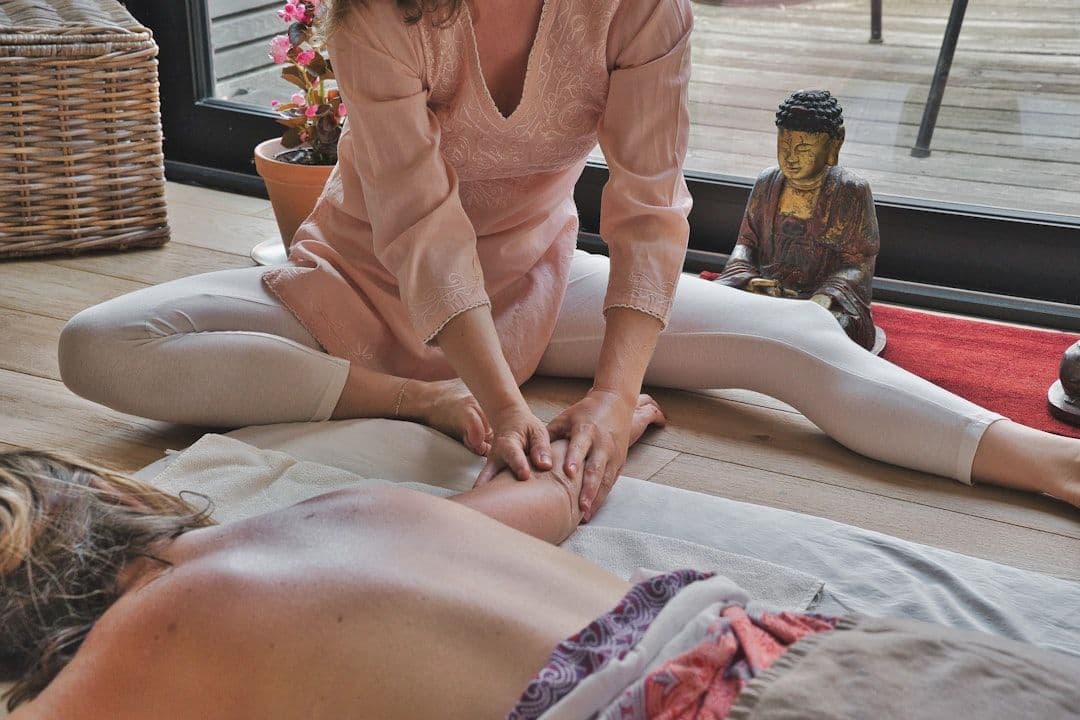
You lie on a thick mat on the floor, fully clothed in loose cotton. Your practitioner kneels beside you, using their body weight to apply sustained pressure whilst guiding your leg into a deep hip stretch. This isn't the oil-and-table massage most people know. Thai massage feels more like having a very skilled partner help you through yoga poses you couldn't achieve alone.
Practitioners use their hands, forearms, knees, and feet to apply pressure along what traditional Thai medicine calls "sen" — energy lines that map roughly onto muscle groups and fascial planes. Between pressure sequences, they'll move you through assisted stretches: your knee to your chest, your spine into gentle rotation, your shoulders opened wide. The combination creates a rhythmic, almost dance-like flow.
A session typically lasts 60 to 90 minutes, working systematically from feet to head. The pressure can be intense — many people describe it as "good pain" — but should never be unbearable. You remain passive throughout, letting the practitioner move your body whilst you focus on breathing and relaxing into the stretches.
Ancient Medicine Meets Modern Understanding
Thai massage developed over centuries in temple settings, influenced by Indian Ayurvedic medicine, Chinese meridian theory, and indigenous Thai healing traditions. Buddhist monks practised and taught these techniques as part of spiritual and physical wellbeing, creating a system that views the body as interconnected rather than isolated parts.
Traditional practitioners understand their work through the lens of energy flow and balance. They apply pressure to specific points to release blocked energy whilst stretches restore natural movement patterns. This framework emphasises the whole person rather than targeting individual symptoms.
From a biomedical perspective, the techniques appear to work through several mechanisms. The sustained pressure stimulates mechanoreceptors in muscles and fascia, potentially reducing pain signals through gate control theory. Assisted stretching improves joint range of motion and muscle flexibility through mechanical lengthening of tissues. The rhythmic, meditative quality may activate parasympathetic nervous system responses, promoting relaxation and stress reduction.
Who Responds Well to Thai Massage
People with chronic back pain often find significant relief, particularly when the discomfort stems from muscle tension or postural problems rather than acute injury. Office workers struggling with neck stiffness, rounded shoulders, and hip tightness frequently report feeling more mobile after regular sessions.
Athletes and yoga practitioners appreciate how Thai massage addresses movement restrictions that develop from repetitive training. The assisted stretches can achieve ranges of motion difficult to reach alone, whilst the pressure work helps release deep muscle tension that accumulates over time.
Those who find conventional relaxation massage too passive often prefer Thai massage's more active approach. The combination of pressure and movement engages both body and mind, making it appealing for people who struggle to relax during purely passive treatments.
What Research Actually Shows
Several well-designed studies support Thai massage for specific conditions. A 2015 systematic review found consistent evidence for reducing chronic low back pain, with effects comparable to conventional treatments. Research on flexibility shows measurable improvements in range of motion, particularly for hip and spine mobility.
Stress reduction benefits appear robust, with studies documenting decreases in cortisol levels and improvements in mood scores after regular sessions. Some research suggests benefits for balance and fall prevention in older adults, though this evidence base remains smaller.
However, research gaps remain significant. Most studies focus on short-term outcomes, and we lack strong evidence for many conditions where Thai massage is commonly used. The quality of studies varies considerably, and more rigorous trials are needed to establish optimal treatment protocols for different conditions.
Finding Skilled Practitioners
Thai massage requires extensive training to perform safely and effectively. Look for practitioners who've completed recognised certification programmes — legitimate training typically requires 200+ hours of instruction. Many qualified practitioners will have studied at established schools in Thailand or completed comprehensive programmes through organisations like the Federation of Holistic Therapists (FHT).
Expect to pay £60-£100 per session in the UK, with London prices typically at the higher end. Initial treatments often cost more as practitioners take extra time for assessment and consultation.
Most people benefit from weekly sessions initially, particularly when addressing specific issues like chronic pain or significant stiffness. Once improvements stabilise, fortnightly or monthly maintenance sessions often suffice. Remember that Thai massage can cause temporary soreness as your body adjusts to increased mobility — this typically resolves within 24-48 hours and shouldn't prevent normal activities.