Before You Arrive
Wear comfortable, loose-fitting clothes that allow for movement — think yoga attire rather than your best outfit. Cotton trousers and a t-shirt work perfectly, as you'll remain fully dressed throughout the session. Avoid tight jeans, short skirts, or anything restrictive around the shoulders and hips.
Eat lightly beforehand. A heavy meal can make the deep stretching uncomfortable, whilst arriving hungry may leave you feeling lightheaded. Aim to finish eating about two hours before your appointment.
Avoid alcohol for 24 hours prior, as it can affect your balance and pain perception during the stretches. Stay well hydrated, but don't drink excessive amounts immediately before — you won't want to interrupt the session for the loo.
Remove jewellery, particularly anything that might catch or press into your skin during movements. Your practitioner will likely ask you to remove shoes and socks, so consider your choice of footwear for easy removal.
The Session Unfolds
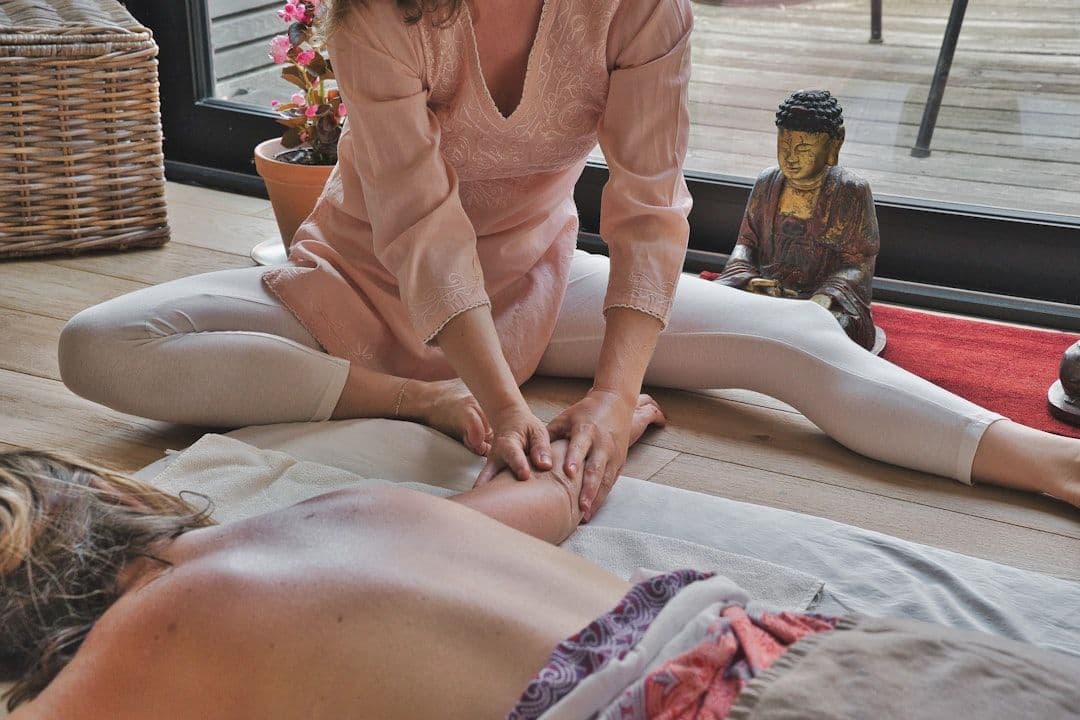
You'll be guided to a thick floor mat rather than a massage table. This isn't a mistake — Thai massage requires the practitioner to use their body weight and leverage, which works best at ground level. The room may feel warmer than expected, as the active stretching generates heat.
Most sessions begin with you lying face down whilst the practitioner works on your feet and lower legs. You'll feel sustained pressure applied with thumbs, palms, and sometimes forearms as they follow energy lines called 'sen'. The pressure is firm and deliberate — quite different from the flowing strokes of Swedish massage.
The middle portion involves a series of assisted stretches. Your practitioner might lift your leg into various positions, gently rotate your spine, or guide your arms through yoga-like movements. They use their own body as a prop, supporting your weight whilst you remain passive. Some stretches may push you to your comfortable edge of flexibility.
Throughout the 60-90 minute session, you'll be repositioned several times — from prone to supine to side-lying, and sometimes seated. The practitioner works systematically from your extremities toward your core, often finishing with gentle work on your head and shoulders.
What You Might Experience
During the session, expect a unique blend of pressure and stretch that may feel intense but shouldn't be painful. Many people describe a "good hurt" — the satisfying sensation of tight muscles being encouraged to release. Some stretches might initially feel beyond your usual range, but trust the practitioner's guidance and communicate if anything feels wrong.
You may hear joints pop or crack as your practitioner moves you through positions. This is generally normal and often welcomed, though tell your practitioner if you prefer they avoid movements that cause audible releases.
Emotionally, responses vary considerably. Some people feel energised and alert, whilst others experience deep relaxation. Don't be surprised if you feel emotional during or after the session — physical release often accompanies emotional release, particularly if you've been holding tension for extended periods.
In the hours following treatment, expect some muscle soreness similar to what you might feel after a good workout. Your joints may feel unusually mobile, and you might notice improved posture. Some people sleep particularly deeply the night after Thai massage, whilst others feel more energetic than usual.
Immediate Aftercare
Drink plenty of water over the next 24 hours to support your body's natural detoxification processes and prevent dehydration. Your muscles have been worked thoroughly, and hydration aids recovery.
Move gently for the remainder of the day. Avoid intense exercise or heavy lifting, but don't become completely sedentary. Light walking or gentle stretching can help maintain the mobility gains from your session.
Take a warm bath if you feel stiff, but avoid very hot water immediately after treatment. Your circulation has been stimulated, and extreme temperatures might overwhelm your system.
Pay attention to your body over the next few days. You may notice areas of stiffness you weren't previously aware of, or conversely, newfound freedom in movement patterns. Both responses indicate your body is adjusting to the work.
Building a Treatment Programme
For acute issues or significant stiffness, weekly sessions for 4-6 weeks often provide the most benefit. This frequency allows your body to adapt gradually whilst building on previous sessions' gains.
Once you've achieved your initial goals, monthly maintenance sessions work well for most people. Athletes or those with physically demanding jobs might benefit from fortnightly appointments.
Results often become most apparent after 3-4 sessions, as your body learns to maintain the increased mobility between treatments. Some people notice immediate improvements in specific areas, whilst others find the benefits accumulate gradually.
Consider combining Thai massage with your own stretching routine at home. Your practitioner can suggest simple movements to maintain progress between sessions. Remember that consistency with both professional treatment and self-care typically yields better long-term results than sporadic intensive sessions.