The Research Landscape
Clinical research specifically examining tuning fork therapy is remarkably sparse. A comprehensive search of major medical databases reveals fewer than a dozen peer-reviewed studies, most of which are case reports or very small pilot trials with fewer than 20 participants.
The most substantial research comes from the broader field of vibroacoustic therapy, where devices delivering specific frequencies through speakers or transducers have been studied more extensively. These studies, whilst not directly applicable to tuning fork practice, provide some insight into how vibrational interventions might affect physiological markers.
One notable exception is research conducted in Japan and South Korea, where tuning fork applications to acupuncture points have been studied as adjuncts to traditional needle therapy. However, these studies typically examine combination treatments, making it difficult to isolate the contribution of the forks themselves.
What Current Studies Suggest
The limited research that does exist focuses primarily on immediate physiological responses rather than long-term therapeutic outcomes. Small studies have measured changes in heart rate variability, cortisol levels, and subjective stress ratings following tuning fork sessions.
A pilot study published in a complementary medicine journal examined 30 participants receiving tuning fork therapy and found statistically significant reductions in self-reported anxiety scores immediately post-session. However, the study lacked a control group and follow-up measurements.
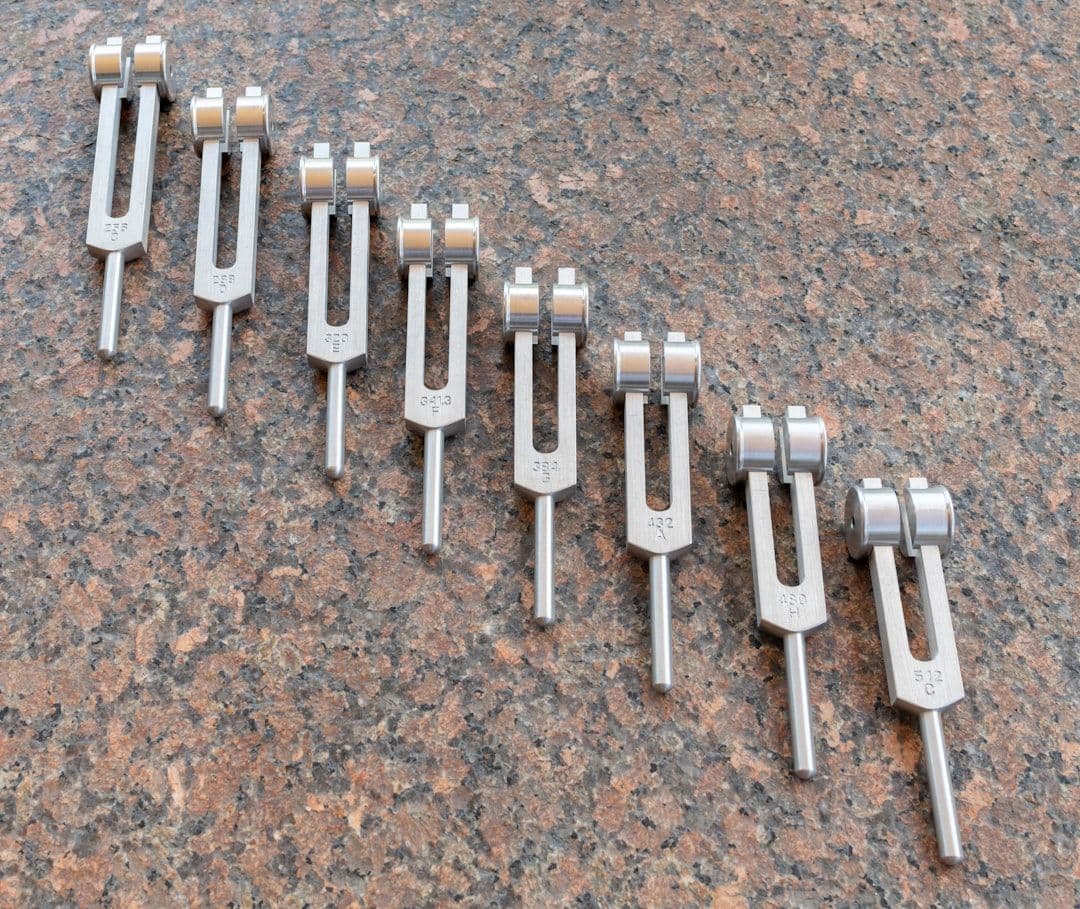
More robust evidence comes from studies of weighted tuning forks applied to specific anatomical points. Research from rehabilitation settings suggests that vibrational stimulation at certain frequencies may influence proprioception and muscle tension, though sample sizes remain small and protocols vary considerably between studies.
Critical Limitations in Current Research
Several methodological challenges limit our understanding of tuning fork effectiveness. Blinding participants to sound interventions is inherently difficult, creating potential bias in subjective outcome measures. Additionally, practitioners often use multiple fork frequencies within single sessions, making it impossible to determine which specific vibrations might be beneficial.
The heterogeneity of practice styles presents another challenge. Some practitioners place forks directly on the body, others hold them nearby, and many combine the approach with other modalities like massage or acupuncture. This variation makes standardised research protocols difficult to design and results challenging to compare.
Publication bias likely affects this field, as negative or null findings in complementary medicine research are less likely to be published. The predominance of case reports and pilot studies suggests that larger, more rigorous trials may have been attempted but not completed or published.
Evidence-Supported Applications vs Uncertain Territory
Current evidence best supports tuning fork therapy as a relaxation technique that may provide short-term stress relief. The immediate calming effects reported in multiple small studies align with what we know about how rhythmic, predictable stimuli can influence nervous system arousal.
What remains uncertain is whether specific frequencies produce distinct physiological effects, whether tuning forks offer advantages over other vibrational interventions, and whether any benefits extend beyond the treatment session. Claims about 'cellular resonance' or 'energy field harmonisation' lack empirical support and should be viewed as theoretical frameworks rather than established mechanisms.
The practice appears safest when framed as a sensory experience that may support relaxation and self-awareness, similar to guided meditation or gentle bodywork, rather than as a medical intervention targeting specific conditions.
Future Research Directions
Meaningful research progress would require larger, controlled studies with clearly defined protocols and standardised outcome measures. Researchers would need to establish whether different frequencies produce measurably different effects, and if so, determine optimal application methods and session durations.
Pragmatic trials comparing tuning fork therapy to established relaxation techniques like progressive muscle relaxation or mindfulness meditation would help clarify its relative value. Studies examining the practice as an adjunct to conventional treatments—rather than as a standalone intervention—might yield more clinically relevant findings.
Neuroimaging studies could potentially illuminate whether vibrational stimulation affects brain activity in ways distinct from other sensory interventions. However, given the current evidence base, such research would be premature without first establishing basic efficacy through well-designed behavioural trials.