The Precision of Calibrated Vibration
A practitioner strikes a gleaming metal fork against a rubber activator. The pure, singing tone that emerges has been precisely calibrated to 128 Hz—exactly middle C, two octaves below the piano. She places the vibrating base against your sternum, and you feel the frequency resonate through your chest wall, creating a subtle but unmistakable sensation of movement within your tissues.
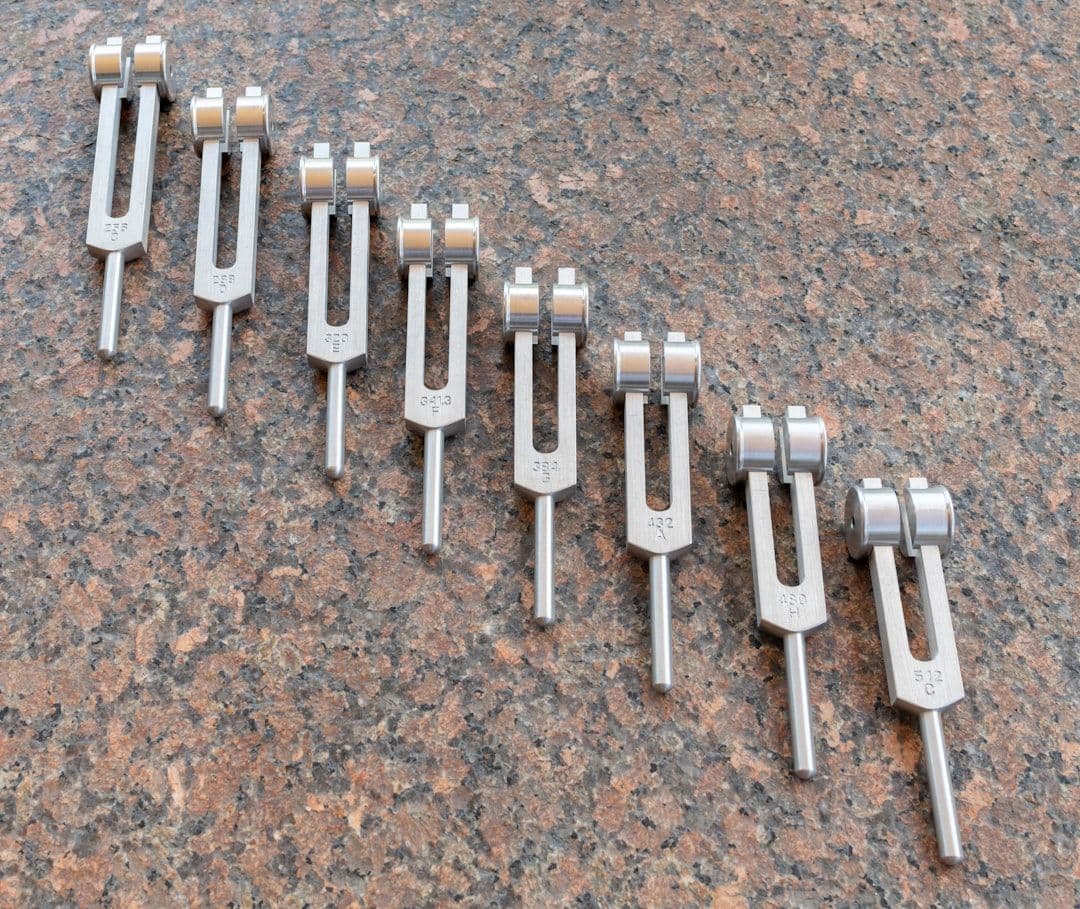
Tuning fork therapy uses these precision-engineered instruments to deliver specific sound frequencies directly to the body. Unlike the wooden forks musicians use for pitch reference, therapeutic tuning forks are crafted from aircraft-grade aluminium, weighted at their tips to extend vibration time, and calibrated to exact frequencies ranging from deep 64 Hz tones to crystalline frequencies above 1000 Hz. Each fork produces not just sound but physical vibration—mechanical energy that practitioners apply to acupuncture points, energy centres, or areas of tension.
The practice represents a marriage of acoustic physics with traditional energy medicine. Practitioners work with the understanding that different frequencies create different physiological and energetic effects, selecting and combining forks based on their intended outcome for each individual session.
From Healing Temples to Modern Practice Rooms
Sound as medicine traces back millennia across cultures—Tibetan singing bowls, Aboriginal didgeridoos, and Gregorian chant all recognised sound's capacity to shift human consciousness and physiology. Tuning forks themselves emerged from musical and scientific contexts in the 18th century, when John Shore invented the device to provide reliable pitch reference for orchestras.
The therapeutic application developed more recently, growing from the work of sound healing pioneers who began exploring how specific frequencies might affect the human biofield. Contemporary practice draws from acupuncture point systems, chakra frameworks, and modern understanding of how mechanical vibration travels through body tissues. Many practitioners trained initially in acupuncture, massage, or other bodywork modalities have integrated tuning forks as a complementary tool.
Today's approach often combines traditional frequency selections with individualised assessment. Some practitioners work primarily with established frequency sets—such as the Solfeggio series or planetary frequencies calculated from celestial rotations. Others develop more intuitive approaches, allowing the client's response to guide fork selection during the session.
How Frequencies Meet the Body
Within the practice framework, tuning fork therapy operates on multiple levels simultaneously. The mechanical vibration travels through tissues, potentially affecting muscle tension, circulation, and nervous system activity. The auditory component engages the brain's frequency-processing centres. Many practitioners also work with concepts of biofield resonance—the idea that the body's energy systems can be influenced by external vibrational frequencies.
Lower frequencies (64-128 Hz) are commonly selected for their grounding and calming qualities. These deep tones may be applied to the feet, base of spine, or lower torso when practitioners aim to promote relaxation or address scattered, anxious states. Mid-range frequencies (256-512 Hz) often target the heart and lung area, with practitioners using them to work with emotional balance and breathing patterns.
Higher frequencies (512 Hz and above) are frequently applied to the head, temples, or upper energy centres when the intention involves mental clarity or energetic stimulation. Some practitioners use very high frequencies (1000+ Hz) sparingly, viewing them as particularly potent for shifting stagnant energy patterns. The combination and sequencing of different frequencies within a single session creates what practitioners describe as a 'frequency journey' tailored to individual needs.
Who Seeks Vibrational Recalibration
People drawn to tuning fork therapy often describe feeling 'out of tune' with themselves—experiencing chronic stress, disrupted sleep patterns, or a sense of energetic stagnation that conventional approaches haven't adequately addressed. Many discover the practice through acupuncturists or massage therapists who incorporate forks into their existing treatments.
Those dealing with persistent muscle tension frequently report the vibrations reaching areas that manual pressure cannot access effectively. People with anxiety or racing minds often appreciate how the frequencies seem to 'reset' their nervous system without requiring the mental discipline that meditation demands. Some clients specifically seek the practice during life transitions—career changes, relationship shifts, or grief processes—viewing the vibrational recalibration as support during periods of personal transformation.
Musicians and sound-sensitive individuals often gravitate toward tuning fork therapy, finding the pure frequencies more palatable than other sound healing approaches that might involve complex overtones or unpredictable timbres.
Inside a Tuning Fork Session
Sessions typically begin with a conversation about your current state and intentions. The practitioner might assess your energy centres through observation or light touch, selecting an initial set of forks based on their framework and your presenting needs. You usually lie fully clothed on a treatment table, though some practitioners work with clients seated.
The practitioner strikes the first fork and may begin by holding it near your ears, allowing you to absorb the pure tone. They then apply the vibrating base to specific body points—perhaps your sternum, the crown of your head, or acupuncture points along energy meridians. Each application lasts 30 seconds to several minutes, with the practitioner often striking the fork multiple times to maintain vibration.
As the session progresses, different frequencies are introduced and combined. You might feel fork vibrations at your feet whilst simultaneously hearing higher tones near your head. Some practitioners use pairs of forks to create beating patterns—subtle rhythmic pulsations that emerge when two slightly different frequencies interact. Sessions typically conclude with integrative time, allowing you to rest as the vibrational effects settle.
Most people report deep relaxation during treatment, with some experiencing subtle energy movements, temperature changes, or emotional releases. The effects often continue developing for hours or days after the session.
Finding Qualified Practice
Tuning fork therapy training varies considerably in depth and approach. Look for practitioners certified through established sound healing schools or those who have completed comprehensive courses that include anatomy, energy system theory, and hands-on practice. Many qualified practitioners hold primary qualifications in acupuncture, massage therapy, or other bodywork modalities, with tuning forks as a specialised addition to their skills.
In the UK, check registrations with the Complementary & Natural Healthcare Council (CNHC) or Federation of Holistic Therapists (FHT). Practitioners working with tuning forks exclusively rather than as an adjunct to other therapies should demonstrate substantial training in sound healing principles and biofield concepts.
Sessions typically range from £40-£80, with initial consultations sometimes costing more. Most practitioners recommend starting with weekly sessions for 4-6 weeks to establish a foundation, then spacing treatments according to your response and ongoing needs. Many people maintain monthly sessions for ongoing nervous system support.
When choosing a practitioner, ask about their training background, which frequency sets they use, and their approach to selecting forks for individual clients. A skilled practitioner should be able to explain their framework clearly whilst remaining responsive to your particular needs and sensitivities.